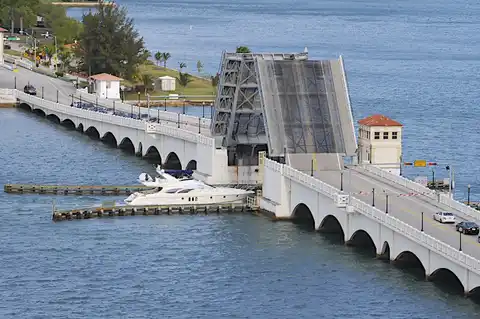
Passenger rules for a Miami yacht charter
Sourced limits that apply before you book, including the six-passenger cap and Miami Beach city rules. This is general information, not legal advice.
The six-passenger cap
46 U.S.C. section 2101 defines an uninspected passenger vessel of less than 100 gross tons as one that carries not more than six passengers, including at least one passenger for hire, or that is chartered with the crew provided or specified by the owner or the owner's representative and carries not more than six passengers. For vessels of at least 100 gross tons, that same section uses a twelve-passenger figure instead.
Friends who are not paying still usually count as passengers if at least one person has paid. The statute's definition of passenger is the one that matters, not a casual head count. This is general information, not legal advice.
When a boat is inspected
46 CFR 175.110 says Subchapter T, the small passenger vessel rules, generally applies to a vessel of less than 100 gross tons that carries 150 or fewer passengers, or has overnight accommodations for 49 or fewer passengers, and that carries more than six passengers, including at least one for hire. It also covers certain crewed charters with more than six passengers, and a bareboat charter (no crew provided) carrying more than twelve passengers. The Certificate of Inspection is the document that states how many people that inspected boat may carry.
Miami Beach city rules
If the trip starts in Miami Beach, the city's Marine Related Business Requirement Checklist is the public list to ask about. It includes Marine Authority approval and occupational codes such as Charter (per boat), 95003403, and Livery (renting), 95003200.
Park waters on Biscayne Bay
The National Park Service prohibits personal watercraft, including jet skis and waverunners, in Biscayne National Park. Park waters are shallow, tide predictions matter, and NOAA chart 11451 covers park waters. Mooring buoys, where provided, are limited to four hours per boat and to vessels up to 45 feet unless the park authorizes a larger one. Do not anchor within 300 feet of a mooring buoy.
What we will not do
We do not operate boats, inspect vessels, or decide which cap applies to a trip. Ask the operator, and ask to see the credential or Certificate of Inspection that matches the boat.
Sources
- 46 U.S.C. section 2101, uninspected passenger vessel definition
- 46 CFR 175.110, small passenger vessel inspection applicability
- City of Miami Beach, Marine Related Business Requirement Checklist
- Biscayne National Park, National Park Service, boating
- Biscayne National Park, National Park Service, mooring buoys
Start a free request
Pick what you need. Five short questions.
Passenger rule questions
What is a six-pack boat?
People use that phrase for an uninspected passenger vessel under 100 gross tons, which may carry no more than six passengers, including at least one passenger for hire, under 46 U.S.C. 2101.
What if my group is larger than six?
You generally need a vessel that is inspected as a small passenger vessel. Ask the operator for the Certificate of Inspection and the passenger cap written on it.
Do Miami Beach rules replace the Coast Guard rules?
No. The federal passenger limits still apply. The city checklist is an additional local business requirement for operators leaving from Miami Beach.
Is this legal advice?
No. It is a plain-language summary of the cited sources, last reviewed November 15, 2026. The operator and, if needed, a lawyer can speak to your trip.
Sources
- 46 U.S.C. section 2101, uninspected passenger vessel definition
- 46 CFR 175.110, small passenger vessel inspection applicability
- City of Miami Beach, Marine Related Business Requirement Checklist
- Biscayne National Park, National Park Service, boating
- Biscayne National Park, National Park Service, mooring buoys
Tell us the trip you have in mind
Send the date, the number of people, and what you want the day to feel like. We ask if we may pass your request to one independent licensed charter operator, and we tell you who that is before we pass it on.